Accountingfly Digital Platform and Website Development
Skills
Collaborators
Resources
About the Project
Project Overview
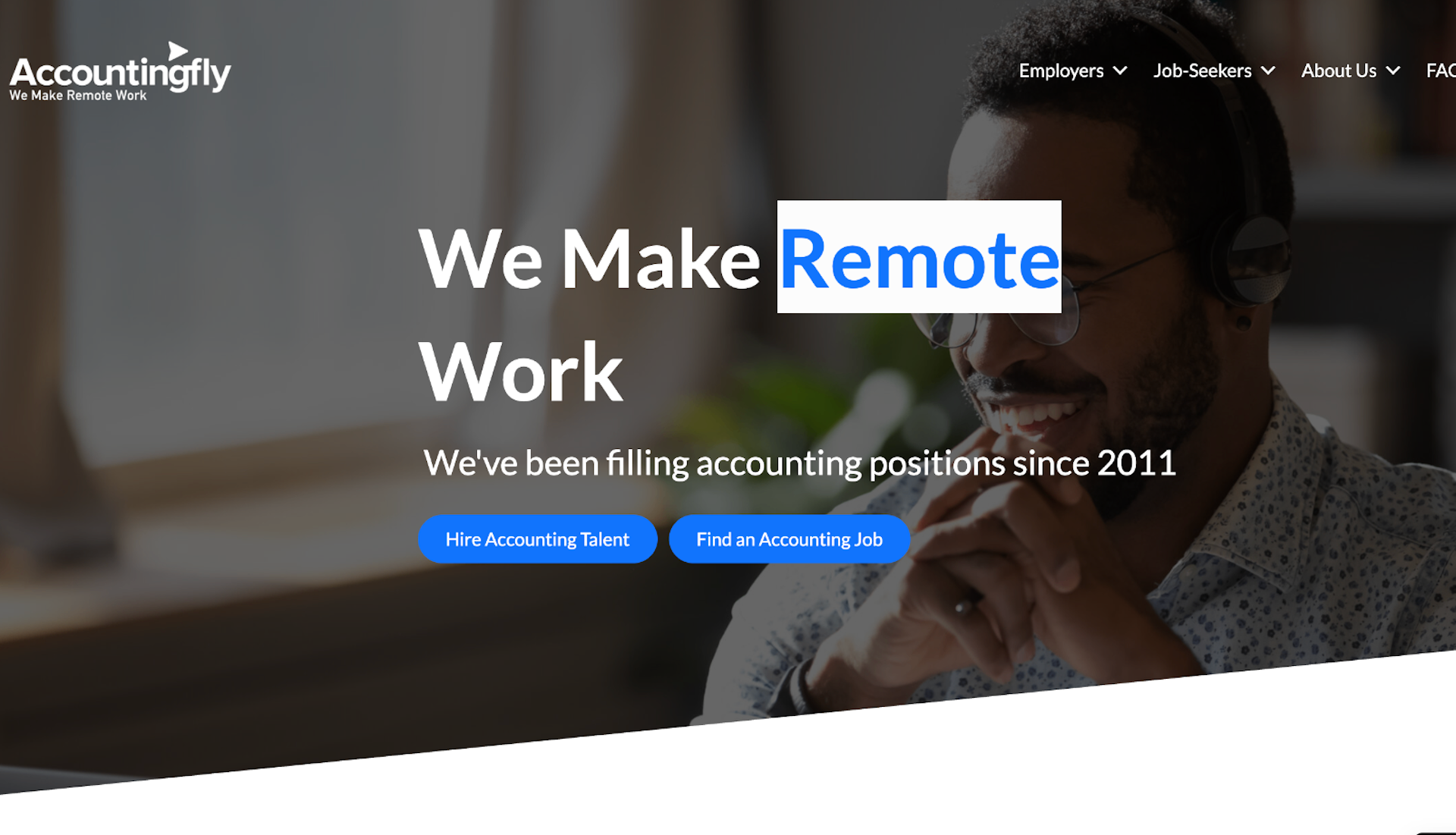
From September 2022 to January 2024, I supported two major phases of Accountingfly's website development during my time at Staffing Future. The objective was to establish and then elevate a professional, scalable digital presence aligned with the company's recruitment strategy in the accounting market, a market where credibility and clarity matter just as much as visual polish, since the site was effectively the first impression for both employers and candidates evaluating whether to trust the platform. Getting that first impression right mattered more than usual here, recruitment platforms live or die on whether both sides of the marketplace, employers posting roles and candidates browsing them, feel like the site actually understands their side of the exchange.
Version 1, running September 2022 through April 2023, focused on launching the initial website, building a functional, brand-aligned platform that clearly communicated Accountingfly's unique value in a crowded recruitment space. That first phase was less about refinement and more about establishing a real foundation, translating what leadership understood about the business into something a first-time visitor could actually navigate and trust, working through DNS setup, hosting configuration, and custom feature integration alongside the visual build itself, since a recruitment platform's technical reliability is just as much a part of the first impression as its design.
Version 2, running April 2023 through January 2024, emphasized performance optimization, refined front-end development, and a more seamless experience for both employers and candidates. Where Version 1 proved the platform could work, Version 2 was about making it work well, faster load times, more consistent design, and a more usable experience for two genuinely different audiences using the same site for different reasons. Sixteen months across two distinct phases meant the work never really had a single finish line, each version built directly on what the last one had established, with Version 2's priorities shaped specifically by how Version 1 had actually performed once it was live and being used by real employers and candidates.
The Issue
Accountingfly needed a professional digital presence that could effectively position the company in the competitive accounting recruitment market. The initial site needed to translate executive-level business objectives into a structured digital solution, which is a harder problem than it sounds, since strategic priorities discussed in a leadership meeting don't automatically map onto specific design and architecture decisions without someone actively doing that translation work, turning a goal like "stand out in a crowded recruiting space" into an actual sitemap, page hierarchy, and content strategy.
As the platform matured, it required iterative improvements to usability, performance, and design consistency, ensuring the site could scale with the company's growth while maintaining reliability across devices and screen sizes. A recruitment platform that looks credible on desktop but breaks down on mobile undermines exactly the kind of trust a site like this depends on, especially when candidates are just as likely to be evaluating opportunities from a phone as from a desk, and a slow-loading or inconsistent experience on either device reads as a lack of professionalism regardless of how strong the underlying content actually is.
Key Objectives
Build a professional, brand-aligned website communicating Accountingfly's recruitment services.
Manage DNS configuration and hosting setup to ensure site reliability.
Implement front-end design enhancements to improve usability and visual consistency.
Optimize site speed and performance to improve overall user experience.
Ensure responsive design across devices and screen sizes.
Collaborate with executive and recruiting leadership to align site updates with business strategy.
My Role & Impact
Front-End Development
Contributed to web design implementation across both site versions, improving usability and visual consistency as the platform matured from launch through refinement.
DNS & Hosting
Managed DNS configuration, hosting setup, and technical infrastructure to maintain site reliability throughout both development phases, treating uptime and configuration accuracy as foundational.
Performance Optimization
Optimized site speed and performance to improve overall user experience in Version 2, treating speed as a real usability factor, not an afterthought, since a slow-loading page reads as unprofessional.
Strategic Collaboration
Worked closely with COO, CEO, and recruiting leadership to align site updates with growth objectives, keeping technical decisions tied to actual business priorities.
The Process
- Collaborated with Accountingfly leadership to understand business goals and recruitment positioning before any development began, since a recruitment platform needs to reflect the company's actual market position, not a generic assumption about what a recruiting site should look like. That upfront alignment shaped everything that followed, from the initial sitemap through the specific features prioritized in each version.
- Supported the launch of Version 1 with front-end development, DNS setup, and custom feature integration, establishing the technical and visual foundation the company would build on for the next year and a half. Getting the underlying infrastructure right at this stage mattered as much as the visible design, since a site that looks polished but sits on unreliable hosting or misconfigured DNS undermines the same trust the design work was trying to build.
- Translated executive business priorities into structured digital design decisions throughout, the ongoing work of turning strategic conversations into specific architecture, layout, and feature choices that actually reflected what leadership was trying to achieve. This wasn't a one-time translation done at kickoff, it continued across both versions as business priorities shifted and matured alongside the company itself.
- Iterated on the platform for Version 2, focusing on performance optimization and design refinement, while ensuring responsive design and cross-device compatibility throughout both phases and building a scalable web infrastructure aligned with the company's long-term growth strategy. Performance work in particular meant going back through Version 1's foundation and identifying specifically what was slowing the experience down, rather than just layering new features on top of an unoptimized base.

The Solution
Delivered two major website versions that progressively strengthened Accountingfly's digital positioning in the accounting recruitment market. Version 1 established the professional foundation, while Version 2 refined performance, usability, and design consistency, a genuine progression rather than a redesign starting over from scratch each time, which meant the second phase could focus entirely on refinement instead of rebuilding groundwork that already worked.
The project strengthened hands-on experience in iterative web development, DNS management, performance optimization, and the ability to translate executive-level objectives into structured digital solutions. Working across sixteen months and two distinct phases also reinforced something that shows up across my other web work, a platform's first version rarely needs to be its final form, it needs to be a solid enough foundation that the next iteration can actually build on it, the same instinct behind TraintoAdapt's own V1-to-V2 progression and Good Night Sleep Devices' ongoing SEO relationship.
Common Questions
Frequently Asked Questions
A recruitment platform built in two phases, first to launch, then to actually perform, refined based on how real employers and candidates used it.